The Role of High-Performance Industrial Adhesives in Modern Manufacturing
High-performance industrial adhesives play a crucial role in modern manufacturing, particularly in the electronics, automotive, and new energy sectors. These adhesives are designed to meet the stringent demands of these industries, ensuring reliable and durable bonds that can withstand extreme conditions.
Understanding the Importance of Industrial Adhesives
Industrial adhesives are essential for a wide range of applications, from bonding electronic components to assembling automotive parts and securing battery modules. The performance of these adhesives is critical, as they must provide strong, long-lasting bonds that can resist environmental factors such as temperature, humidity, and mechanical stress.
For example, in the electronics industry, adhesives are used to bond sensitive components like semiconductors, capacitors, and resistors onto printed circuit boards (PCBs). In the automotive sector, adhesives are used for structural bonding, sealing, and even noise reduction. In the new energy sector, adhesives are vital for securing battery cells and modules, ensuring the safety and efficiency of energy storage systems.
Key Properties of High-Performance Industrial Adhesives
High-performance industrial adhesives are engineered to meet specific requirements, including:
- Chemical Resistance: Adhesives must be resistant to a variety of chemicals, including solvents, oils, and cleaning agents, to ensure long-term durability.
- Thermal Stability: They must maintain their strength and integrity over a wide range of temperatures, from extreme cold to high heat, without degrading or losing their bond.
- Mechanical Strength: Adhesives need to provide strong, durable bonds that can withstand mechanical stress, such as vibration, impact, and shear forces.
- Electrical Insulation: In the electronics industry, adhesives often need to provide electrical insulation to prevent short circuits and ensure the safe operation of electronic devices.
These properties are achieved through careful formulation and the use of advanced materials, such as epoxy resins, polyurethanes, and acrylics. Each type of adhesive has its own set of advantages and is selected based on the specific application requirements.
Applications in Electronics Manufacturing
In the electronics industry, adhesives are used for a variety of applications, including:
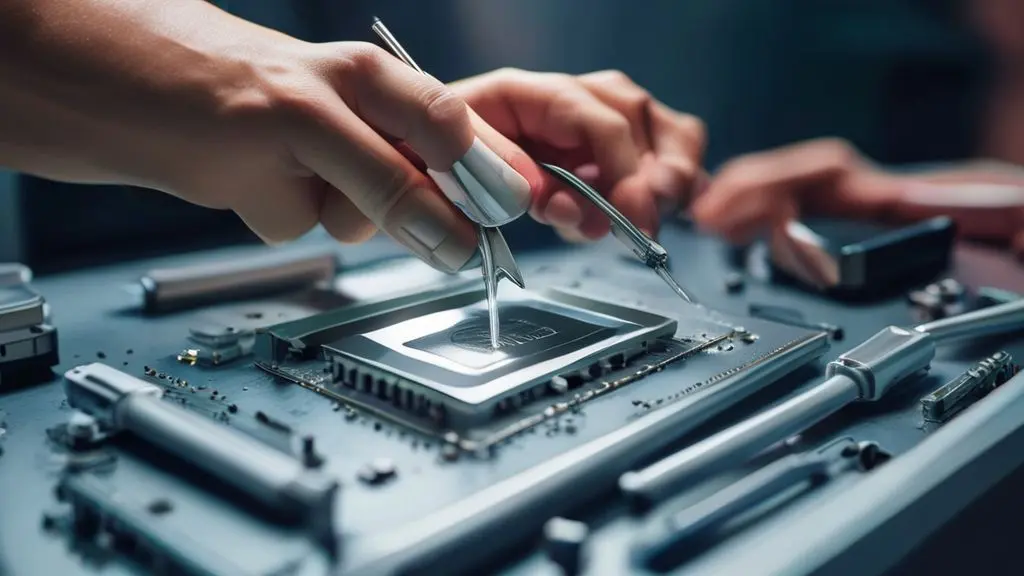
- Component Bonding: Adhesives are used to bond electronic components, such as integrated circuits, resistors, and capacitors, onto PCBs. This ensures that the components remain securely in place during the manufacturing process and throughout the product's lifecycle.
- Conformal Coating: Adhesives can also be used as conformal coatings to protect electronic components from environmental factors, such as moisture, dust, and corrosive gases. This is particularly important for products that are exposed to harsh environments, such as automotive and industrial electronics.
- Thermal Management: Some adhesives are formulated to provide thermal conductivity, allowing them to dissipate heat away from electronic components. This is crucial for maintaining the reliability and performance of high-power devices, such as power transistors and LEDs.
For example, in the production of smartphones, adhesives are used to bond the display to the frame, secure the battery, and attach various internal components. The adhesives must provide a strong, durable bond while also being flexible enough to accommodate the thin and lightweight design of the device.
Applications in Automotive Assembly
In the automotive industry, adhesives are used for a wide range of applications, including:
- Structural Bonding: Adhesives are used to bond body panels, frames, and other structural components, providing a strong, lightweight alternative to traditional welding and fastening methods. This helps to reduce the overall weight of the vehicle, improving fuel efficiency and reducing emissions.
- Sealing and Gasketing: Adhesives are used to seal joints and gaps in the vehicle, preventing the ingress of water, dust, and other contaminants. This is particularly important for maintaining the integrity of the vehicle's interior and protecting sensitive electronic components.
- Noise Reduction: Adhesives can also be used to dampen vibrations and reduce noise, improving the comfort and acoustics of the vehicle. This is achieved by applying damping materials, such as viscoelastic adhesives, to areas of the vehicle that are prone to vibration, such as the floor and firewall.
For example, in the assembly of electric vehicles (EVs), adhesives are used to bond the battery pack to the vehicle's frame, ensuring a secure and stable connection. The adhesives must provide a strong, durable bond while also being resistant to the high temperatures and chemical exposure that can occur in the battery environment.
Applications in New Energy Solutions
In the new energy sector, adhesives are used for a variety of applications, including:
- Battery Module Assembly: Adhesives are used to bond battery cells and modules, ensuring that they are securely held in place and protected from mechanical and environmental stress. This is crucial for the safety and reliability of energy storage systems, such as those used in EVs and renewable energy installations.
- Thermal Interface Materials (TIMs): Adhesives can also be used as thermal interface materials to improve the thermal conductivity between battery cells and cooling systems. This helps to dissipate heat away from the cells, maintaining their performance and extending their lifespan.
- Encapsulation and Potting: Adhesives are used to encapsulate and pot electronic components, such as inverters and control units, protecting them from environmental factors and ensuring their long-term reliability. This is particularly important for components that are exposed to harsh conditions, such as those used in wind turbines and solar panels.
For example, in the production of lithium-ion batteries, adhesives are used to bond the individual cells into modules and to secure the modules within the battery pack. The adhesives must provide a strong, durable bond while also being resistant to the high temperatures and chemical exposure that can occur in the battery environment.
Trends and Innovations in Industrial Adhesives
The field of industrial adhesives is constantly evolving, with new innovations and trends emerging to meet the changing needs of the manufacturing industry. Some of the key trends and innovations include:
- Sustainability: There is a growing demand for more sustainable and environmentally friendly adhesives, such as those that are biodegradable, non-toxic, and made from renewable resources. This is driven by the increasing focus on sustainability and the need to reduce the environmental impact of manufacturing processes.
- Smart Adhesives: Smart adhesives are being developed that can change their properties in response to external stimuli, such as temperature, light, or pH. For example, some smart adhesives can be activated or deactivated by changes in temperature, allowing for easy disassembly and recycling of bonded components.
- Advanced Formulations: New formulations are being developed to improve the performance of adhesives in specific applications. For example, adhesives with enhanced thermal conductivity are being developed for use in high-power electronics, while adhesives with improved flexibility are being developed for use in flexible electronics and wearable devices.
These trends and innovations are driving the development of new and improved adhesives that can meet the increasingly demanding requirements of modern manufacturing. B8X, for instance, is at the forefront of these developments, leveraging advanced materials and innovative formulations to provide high-performance adhesives that meet the needs of the electronics, automotive, and new energy sectors.
Conclusion
High-performance industrial adhesives are essential for the success of modern manufacturing, particularly in the electronics, automotive, and new energy sectors. By providing strong, durable, and reliable bonds, these adhesives enable the production of high-quality, high-performance products that can withstand the rigors of real-world use. As the industry continues to evolve, the development of new and innovative adhesives will play a critical role in meeting the changing needs of manufacturers and consumers alike.
Write your comment